
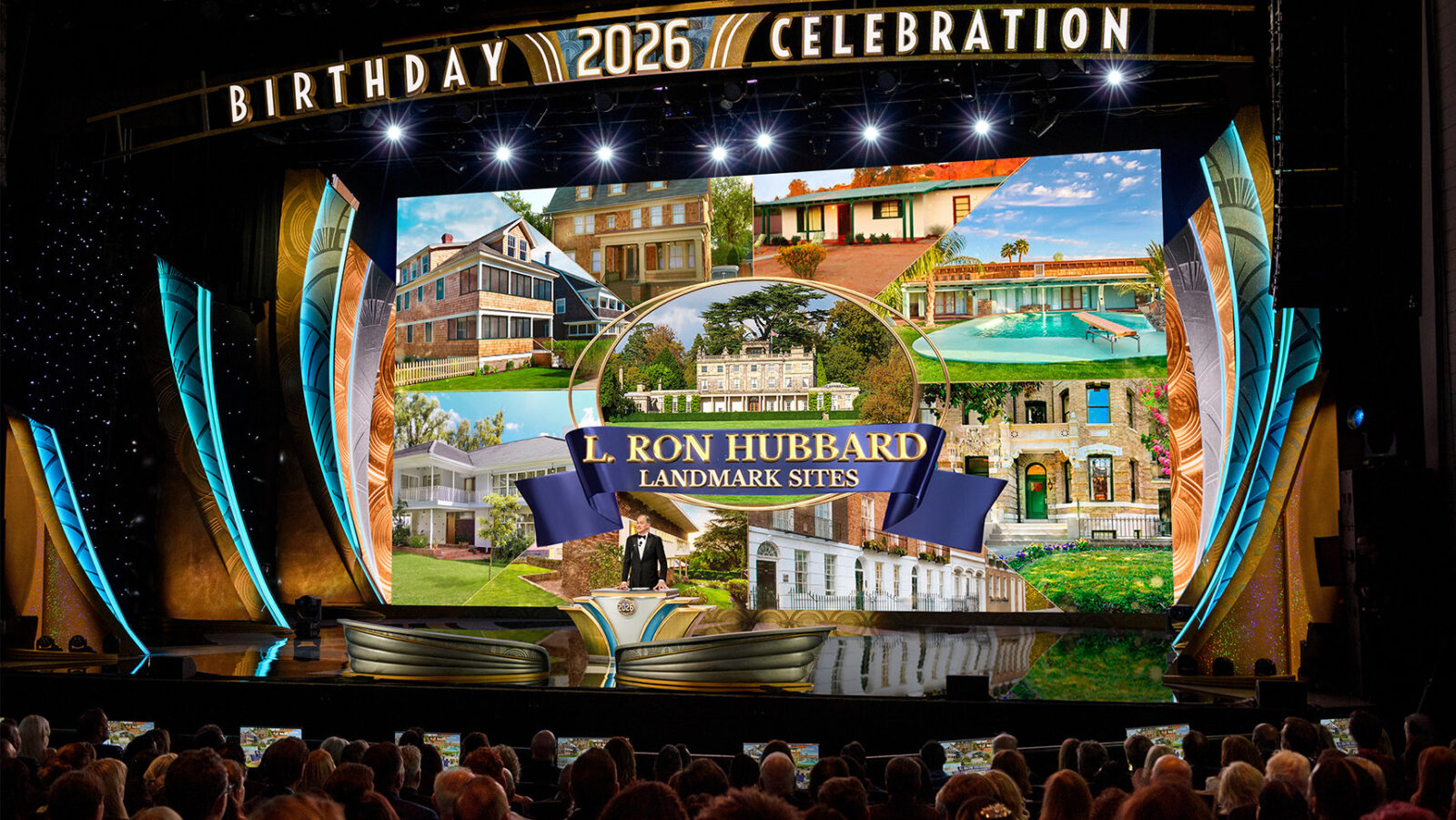
From New Jersey to Telde in Gran Canaria, the L. Ron Hubbard Landmark Sites form an international route of memory, restoration and religious geography.
What follows is both a journey and a personal reflection: a look at ten restored places where history, memory and the life of L. Ron Hubbard come together across continents to form a modern religion that since just a few decades, touches the lives of tens of millions of people.
In La Estrella, a coastal area of Telde in Gran Canaria, a white villa appears to stand between land and ocean. From its rooms, the eye falls toward the Atlantic; from its terraces, the horizon is not merely scenery, but part of the story being told. Those who attended its recent private presentation remembered the sea air, the clean light, the Canarian garden of black volcanic stone and red geraniums, and the feeling of entering a house carefully returned to another time.
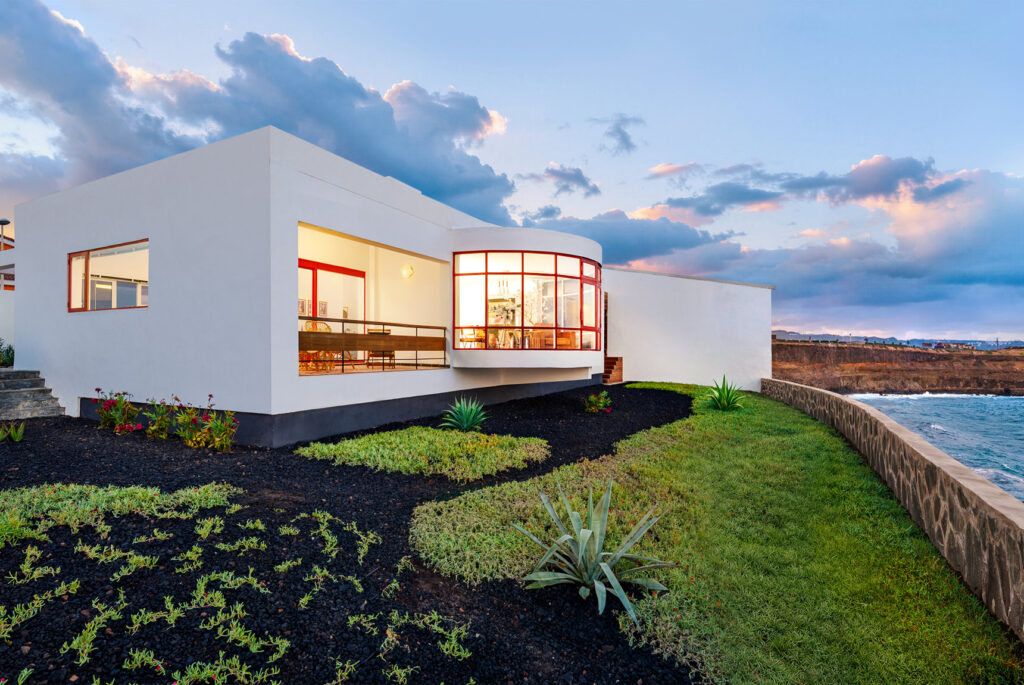
The house is known as Estrella Villa. For members of Scientology, it is a place of particular spiritual significance. For the curious visitor, even one with no connection to the religion, it raises a broader and fascinating question: how does a modern religion build its places of memory?
Estrella Villa, or Villa Estrella, is the tenth of the L. Ron Hubbard Landmark Sites, an international series of restored properties connected with the life and work of L. Ron Hubbard, founder of Dianetics and Scientology. The official Landmark Sites present these places as historically significant locations in Mr Hubbard’s travels and work, restored to reflect how they appeared when he lived and worked in them.
From a Coastal House to a Global Route
The route begins far from Gran Canaria, on the coast of New Jersey. In Bay Head, about an hour south of New York, the restored house is associated with the writing of Dianetics: The Modern Science of Mental Health, published in Manhattan on May 9, 1950. The house is open to visitors and presents objects, photographs and interpretive materials related to the origins of the book.
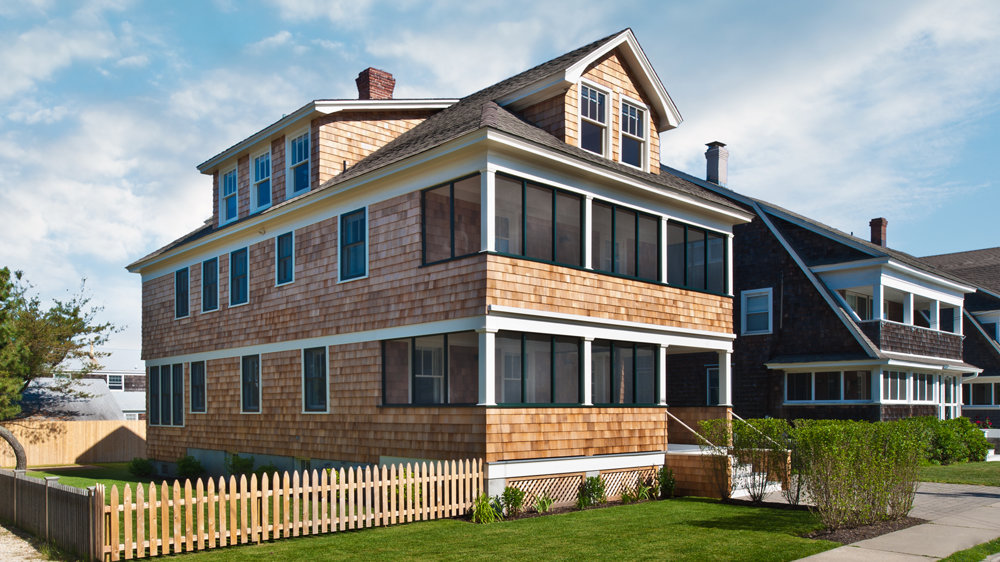
From Bay Head, the story moves to Aberdeen Road, in Elizabeth, New Jersey. There, after the publication of Dianetics, the first Hubbard Dianetic Research Foundation was temporarily established in Mr Hubbard’s residence. The house is not presented simply as a private home, but as the place where a written work began to become an organized activity: lectures, demonstrations, correspondence, students, working rooms and public interest.
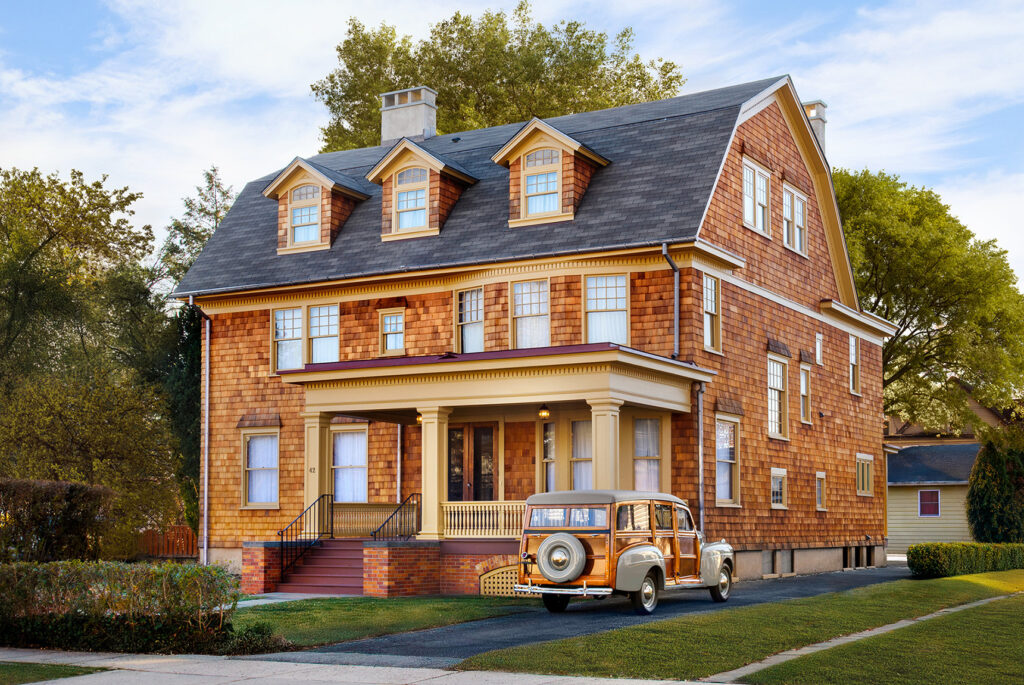
The restoration reconstructs spaces such as the living room, the dining room converted into an office, rooms used for demonstrations of auditing (an exact methodology through which Scientologists walk towards Salvation or Total Freedom as we call it), and the Ford “Woody” associated with L Ron Hubbard’s journeys between Bay Head and Elizabeth. For an outside visitor, this site marks a familiar moment in the history of religions and movements: the point at which a text begins to require rooms, people, schedules and structure.
Phoenix and the Desert Years
The landscape changes dramatically in Phoenix, Arizona. The humid Atlantic coast gives way to desert light, red mountains and mid-century architecture. At Camelback House, near Camelback Mountain, Scientology’s official narrative places the 1952 moment in which Mr Hubbard identified the human spirit as central to the religion.
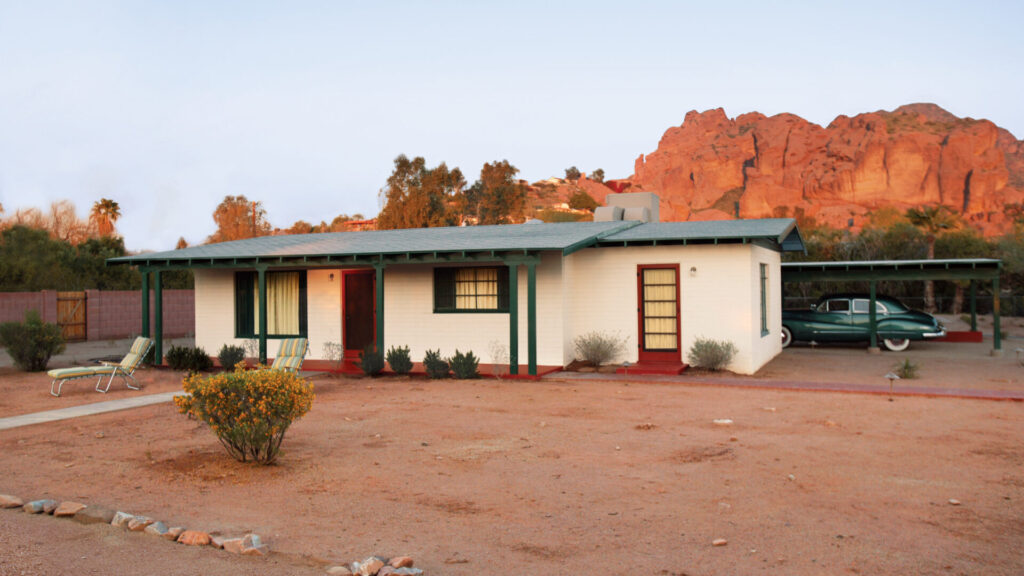
One does not need to share that belief to understand the historical weight assigned to the place: in the history of any religion, there are locations followers understand as points of doctrinal definition.
Also in Phoenix, Osborn Road represents another stage: the consolidation of Dianetics and Scientology in the mid-1950s. Built in 1948 among citrus groves, the house became Mr Hubbard’s residence in October 1954. From there, he wrote Dianetics 55! (a landmark book regarding the importance of Communication) and oversaw the reunification of Dianetics and Scientology.
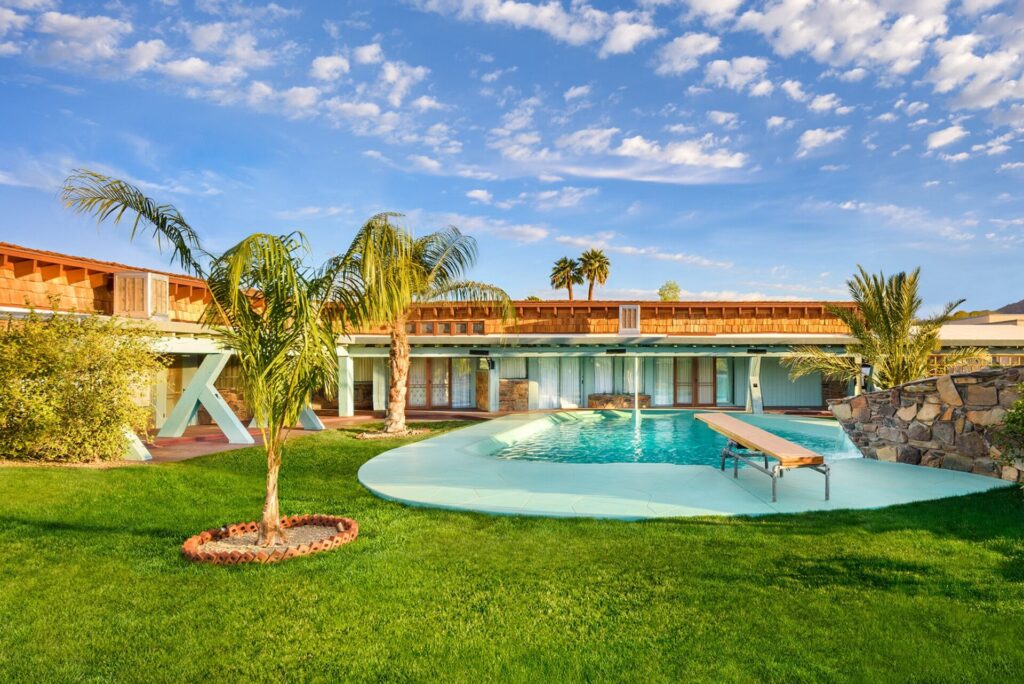
Today, the restoration recreates the period atmosphere with mid-century furnishings, personal objects, recording equipment, vehicles and the restored swimming pool.
Washington and London: A Religion Organizes
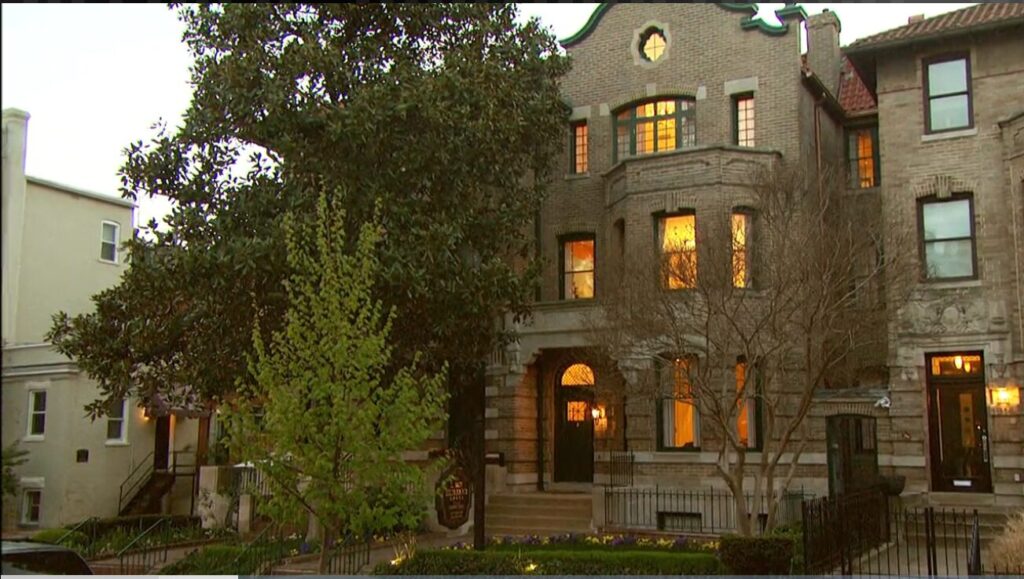
From Phoenix, the route turns institutional. In Washington, DC, the former Founding Church of Scientology at 1812 19th Street NW recalls the period in which Scientology moved from expansion to administration and international coordination. The site represents the stage at which communication lines, publications, organizational materials and correspondence became essential to the development of a new religion.
The next station lies across the Atlantic, in London. Fitzroy House, a Georgian building at 35/37 Fitzroy Street, already belonged to another cultural map before its association with Scientology. It had been the residence of George Bernard Shaw and stands in a district long associated with writers, printers and intellectual life. In 1956, it was acquired by the Hubbard Association of Scientologists International and became Mr Hubbard’s London office and a communications center for Scientology organizations of the period.
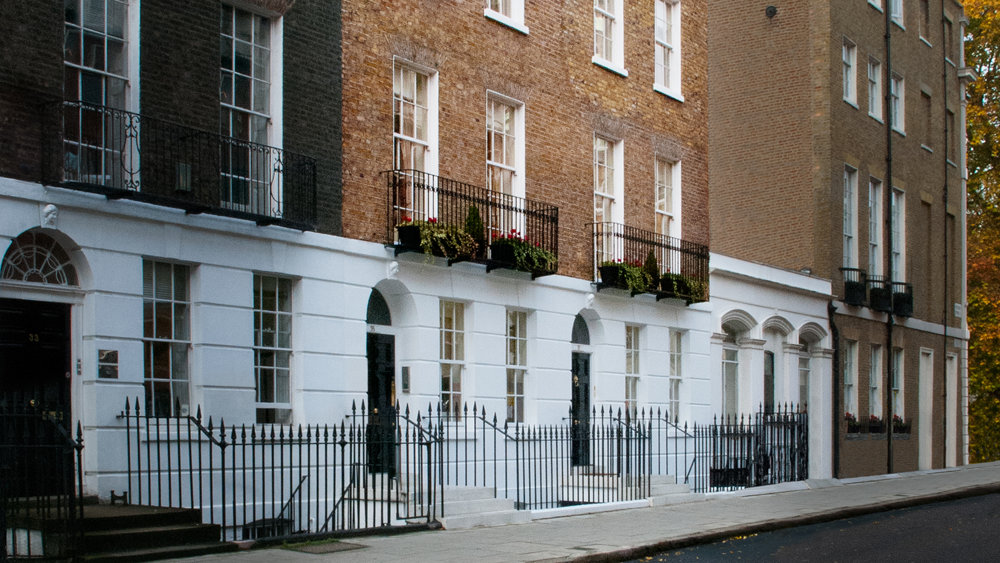
Here the route acquires a specifically European resonance: a religion born in postwar America enters a Georgian house in the British capital, within a much older geography of literature, publishing and public debate.
Saint Hill: The Historic Heart of the Route
The point of greatest historical depth is Saint Hill Manor, in East Grinstead, Sussex. Few modern religions have placed such a decisive stage of their development in an English manor with records reaching back to the sixteenth century. Saint Hill is documented from 1567 and later passed through the hands of owners including the Crawfurd family, scientist Edgar March Crookshank, Margaret Biddle and the Maharajah of Jaipur.
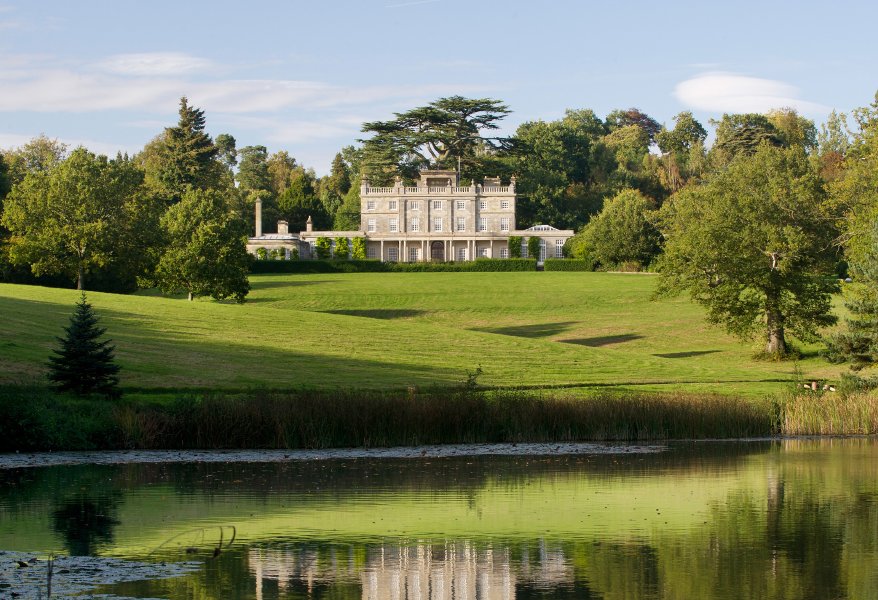
Mr Hubbard acquired Saint Hill in March 1959, and the manor became his home and the worldwide headquarters of Scientology until 1967. It is more than another stop on the route. It is the great palimpsest of the Landmark Sites: a house where Georgian architecture, aristocratic history, imperial memory, decorative art, heritage conservation and a twentieth-century religion overlap.
Its restoration, carried out for the centennial of L Ron Hubbard’s birth in 2011, used methods and materials linked to the original construction of the 1790s. The conservation of the Monkey Room mural and the restoration of spaces such as the Grand Entrance Hall, Mr Hubbard’s office, the library, the darkroom and the formal rooms make Saint Hill a capsule of several historical periods at once.
Africa: Expansion, Reform and Film
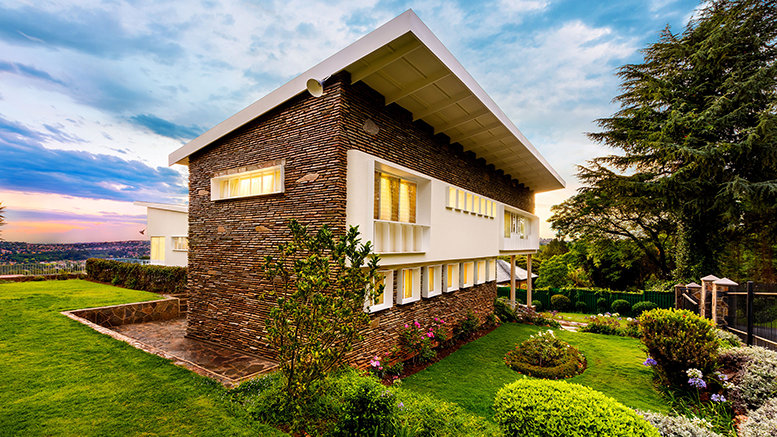
From Sussex, the route moves to the southern hemisphere. At Linksfield Ridge House, in Johannesburg, the Landmark Site recalls Mr Hubbard’s stay in South Africa in late 1960. There he developed introductory routes for Scientology churches and missions and drafted a proposed constitution based on “one man, one vote” for apartheid-era South Africa, together with a Bill of Rights and Penal Code focused on equality and justice.
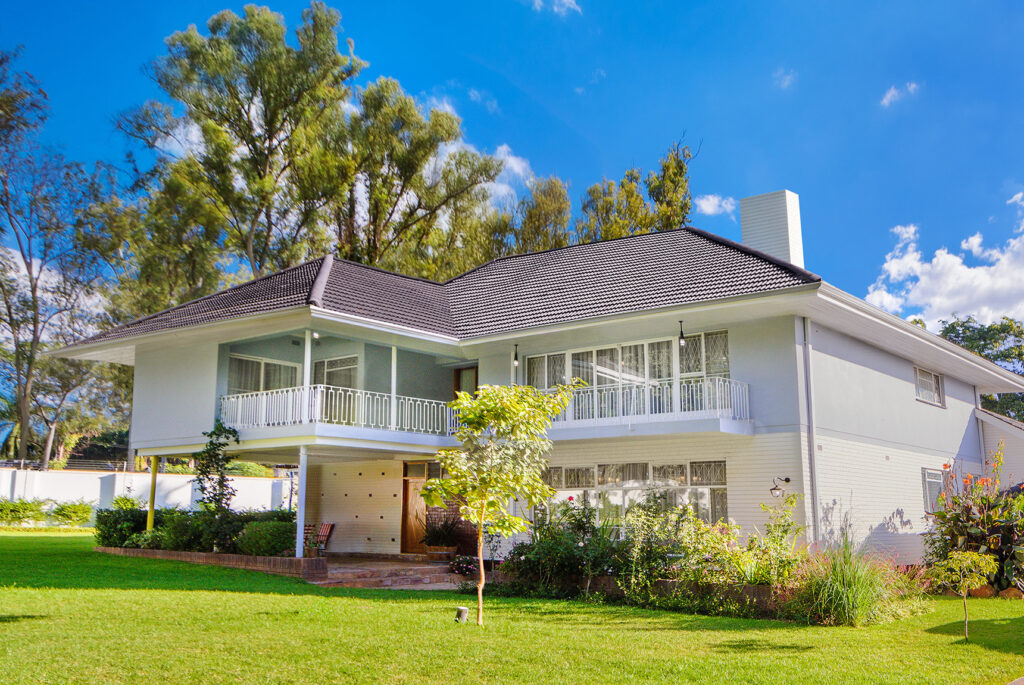
Farther north, at Alexandra Park in Harare, then Salisbury, Rhodesia, the restored house recalls the period of 1966. The site is associated with the filming of the Clearing Course lectures (probably the only preserved video recording of a course), the recording of An Introduction to Scientology interview, and meetings with ministers and officials. Here the memory is not only of desks and manuscripts, but also of cameras, lectures and recorded transmission — modern tools of religious communication.
Gran Canaria and the Return to the Sea
Finally, the route returns to the ocean.
At Estrella Villa, the visitor does not encounter a cathedral or monumental temple. One finds a 1960s house overlooking the Atlantic. That contrast is precisely what makes it interesting. The official Estrella Villa page explains that Mr Hubbard arrived in Las Palmas in February 1967 and established his base of operations in La Estrella (Telde) for advanced research and communications with the port, while coordinating the refitting of the vessels Enchanter and Avon River.
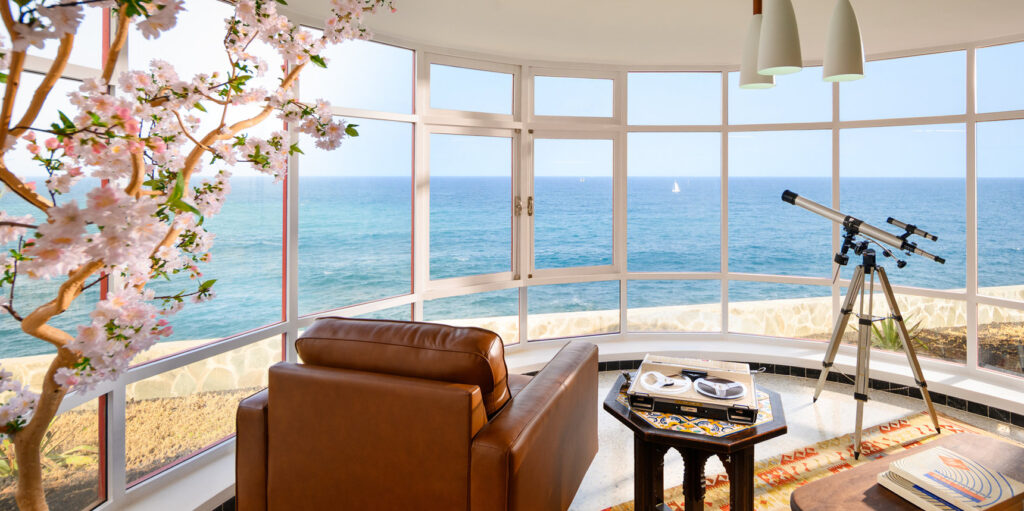
From there, he recorded Ron’s Journal 1967, using an Aiwa tape recorder now displayed in the villa. The site also preserves the room where the desk and British Mark V E-Meter (a religious artefact tool) associated with his religious research are displayed, the kitchen converted into a communications center with Sharp radios, and the 1967 Ford Country Squire Hubbard drove almost daily to the port.
For an external reader, these objects do not need to be understood as relics in the traditional sense. They can also be read as artifacts of memory: material things that help tell a story. A tape recorder, a desk, a car, a radio, a room facing the sea — each becomes part of the way a modern religion makes its past visible.
The Local Memory of La Estrella
The public presentation of Estrella Villa added something that no archive alone can provide: a local pulse. Those who were there did not speak only of dates, rooms or restored objects. They remembered the sound of Canarian folklore opening the ceremony, the Atlantic stretching behind the stage, the black volcanic stone of the garden, the red flowers against the white walls, and the feeling that the house had not merely been restored, but returned to its place in the landscape.
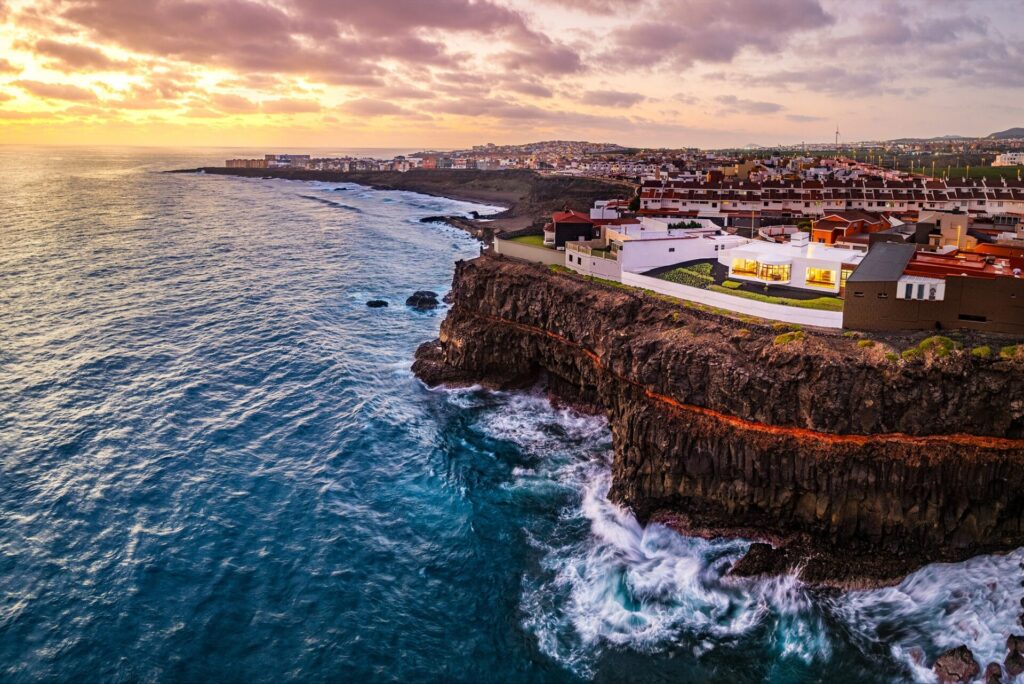
There were also smaller memories, the kind that give a historic site its human texture: the surprise of seeing 1960s furnishings brought back with such care, the impression that the villa seemed naturally anchored between land and sea, and the recollection of a neighbor who remembered that an important American researcher had once lived there. These details matter because they root the larger story in a real community. Estrella Villa is not only part of the history of Scientology; it is also part of La Estrella, of Telde, and of Gran Canaria’s coastal memory.
Without that local layer, the villa might be seen simply as another restored historic house. With it, the site becomes something richer: a meeting point between international religious history and the lived landscape of the Canary Islands — its coastline, architecture, oral memory, light and sea.
A Route of Memory
Every tradition, ancient or modern, eventually finds its places. A road, a room, a hill, a house, a city gate, a desk by a window: over time, certain locations begin to hold more than architecture. They hold memory.
That is why the comparison with the Camino de Santiago is tempting, though it must be understood poetically rather than literally. The Camino is a medieval Christian pilgrimage network, shaped over centuries by faith, hospitality, churches, monasteries, bridges, hospitals and the footsteps of millions of pilgrims. It leads toward Santiago de Compostela and belongs to one of Europe’s oldest spiritual geographies.
The L. Ron Hubbard Landmark Sites are not that kind of pilgrimage. They are not a single road across a continent, nor a medieval route worn into the landscape by generations of walkers. They are something more modern: a constellation of restored places spread across continents, each one linked to a decisive moment in the formation of Dianetics and Scientology.
Yet the deeper human impulse is similar. People seek places where history can be entered. They travel not only to read about what happened, but to stand where it happened; to see the desk, the garden, the room, the coastline, the staircase, the road to the port. To be caressed by the sun and the wind, and watch and hear the waves that help inspire and safely navigate higher levels of existence. In Santiago, memory is carried by paths and stones. In the Mr Hubbard Landmark Sites, memory is carried by houses, offices, recording rooms, libraries, vehicles, photographs, carefully restored interiors but also depth, calmness and velocity that Mr Hubbard found in each of these emplematic places.
Other modern religious traditions have also created such geographies. The Mormon Pioneer National Historic Trail in the United States, for example, remembers the long westward journey of Mormon pioneers from Nauvoo, Illinois, to the Salt Lake Valley. That route tells the story of a people on the move. The Landmark Sites tell a different kind of story: not a migration, but a sequence of places where writing, research, teaching, organization and spiritual development took form.
Seen in this light, the ten sites are less a pilgrimage road than a map of beginnings, a map of milestones. Bay Head, Aberdeen Road, Phoenix, Washington, London, Saint Hill, Johannesburg, Harare and Gran Canaria do not form one continuous path underfoot. But together they create an itinerary of memory — a way of following how a modern religion came to see itself, organize itself, form its unique religious order, preserve its origins and give physical form to its history while ensuring its future.
A Modern Geography of Memory
That is the key to the whole series. Bay Head represents the written origin. Aberdeen Road, the first organization. Phoenix, doctrinal definition and the reunification of Dianetics and Scientology. Washington and London, international communication. Saint Hill, the worldwide headquarters. Johannesburg and Harare, the African dimension. Estrella Villa, the maritime horizon of 1967 that completed Scientology as a religion, as History of Religion Professor Dr Francisco Diez de Velasco has often stated.
For a Scientologist, these places may carry an immediate devotional meaning. For a curious visitor, they offer another reading: that of a modern religion consciously preserving its historical heritage through archives, objects, photographs, restored houses and narratives of place — not only through later retellings, but through writings, recordings, workspaces and material traces directly associated with its founder.
In ancient traditions, sacred places often form slowly. A tomb, a cave, a tree, a mountain or a city gathers meaning over generations. In modern religions, the process can be more documentary. One may know where the founder lived, what he wrote, what he recorded, what objects he used and which rooms he occupied. Memory rests less on accumulated legend than on archive, preservation and restoration.
It is difficult to look at these restorations without recognizing the vision and care behind them. I deeply admire Mr. David Miscavige, our ecclesiastical leader in Scientology, for ensuring that the places associated with L. Ron Hubbard are not left to fade into memory, but are preserved with precision and made available for future generations. That admiration extends as well to the restorers, architects, archivists, craftsmen, staff members and volunteers whose work has brought these houses, offices and rooms back to life, allowing them once again to speak with clarity, dignity and historical presence. I have had the honor of participating in to the completion of Villa Estrella, in my homeland Spain, and I have never felt a stronger connection to a place than Villa Estrella, the birthplace of the religious order I have now been serving for nearly 3 decades.
That is why Estrella Villa has force as (for now) the closing point of the route. Not only because of what occurred there within the internal history of Scientology, but because of its condition as a threshold: house and imagined ship, land and sea, residence and point of departure. One attendee described it as “a firm ship upon the grandeur of the sea.” It is enough to look at the place to understand it.
In the end, the ten Landmark Sites form a kind of contemporary spiritual map. They are not the Camino de Santiago. They do not claim to be. But, like all religious itineraries, they respond to a deeply human need: to give visible form to memory, to locate history in the physical world, and to allow those who come later to say: something happened here.