
Valencia Mission Highlights Volunteer-Led Human Rights, Drug Prevention and Flood Relief Efforts
Views: 4
New Year’s 2026 review cites community work in La Llum district and nearly 200 local volunteers supporting education and emergency response
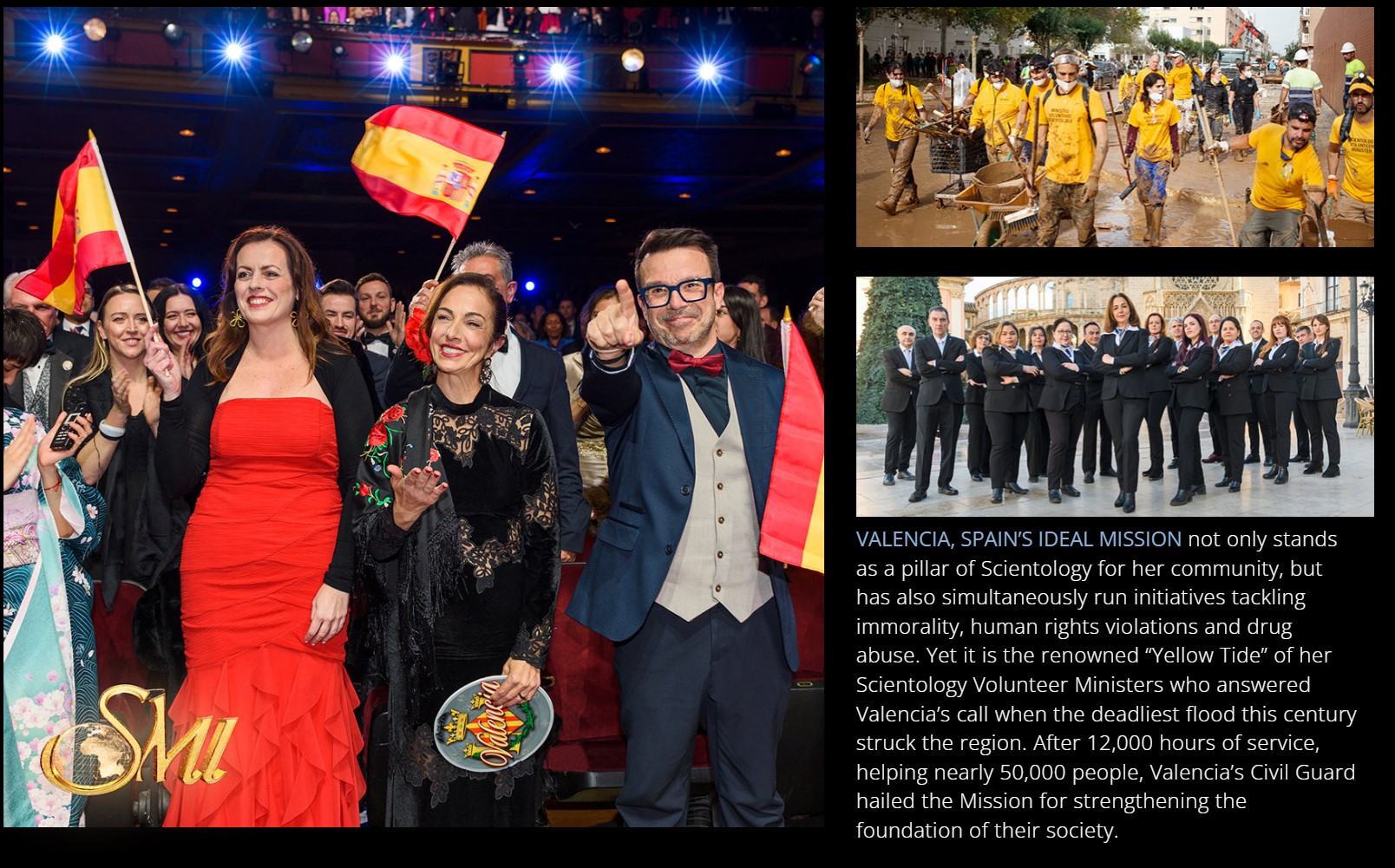
VALENCIA, Spain—15 January 2026—A community outreach program led by the Church of Scientology Mission of Valencia was highlighted in the New Year’s Celebration 2026 annual review, which presented local initiatives combining introductory religious services with volunteer-run prevention and civic-education campaigns in the city’s west-side La Llum (La Luz) neighborhood.
The New Year’s review described Valencia residents as facing heightened concern about crime and public security and pointed to the local Mission as a venue for community support and volunteer action. Public safety statistics for Spain are tracked quarterly by the Ministry of the Interior’s crime statistics portal and are also contextualized by Valencia’s municipal statistics office through its city data publications.
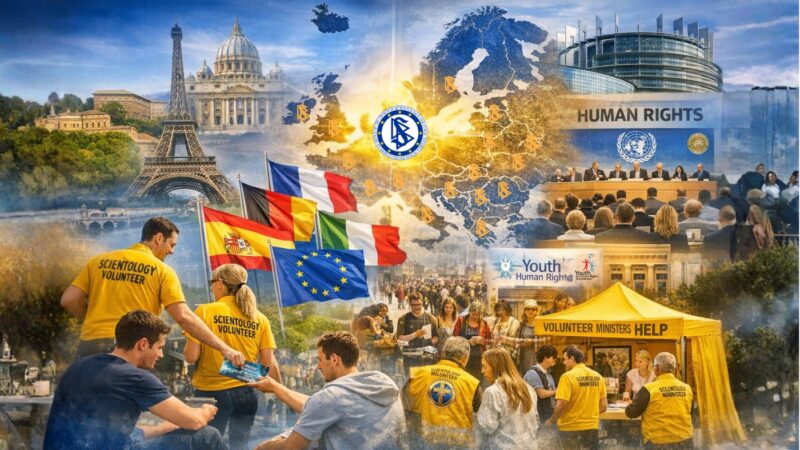
As explained by the review, the Valencia Mission delivers Scientology services “from introductory levels to the State of Clear.” The concept of Clear is presented by the Church of Scientology as a milestone on its spiritual counselling pathway, while the Mission’s community work is carried out by volunteers advancing three Church-sponsored social programs: United for Human Rights, The Way to Happiness, and Drug-Free World.
Human rights education anchored in the Universal Declaration
In Valencia, volunteers use human-rights education materials that reference the Universal Declaration of Human Rights, adopted by the United Nations in 1948. The approach aligns with the core objective described by Youth for Human Rights International: improving awareness of the rights enumerated in the Declaration and encouraging respect, tolerance, and peaceful coexistence in daily life. Local volunteers say their outreach targets both residents and visitors, reflecting Valencia’s role as a major cultural and tourism center in Spain.
“The Way to Happiness” and community conduct
Volunteer teams also distribute and discuss The Way to Happiness, a secular moral code written by Scientology founder L. Ron Hubbard in 1980, structured around 21 precepts focused on personal integrity, responsibility, and respect for others. Organizers describe the booklet as a practical tool used in neighborhood settings—particularly where communities are seeking positive, non-confrontational ways to strengthen social cohesion.
Drug prevention in public spaces
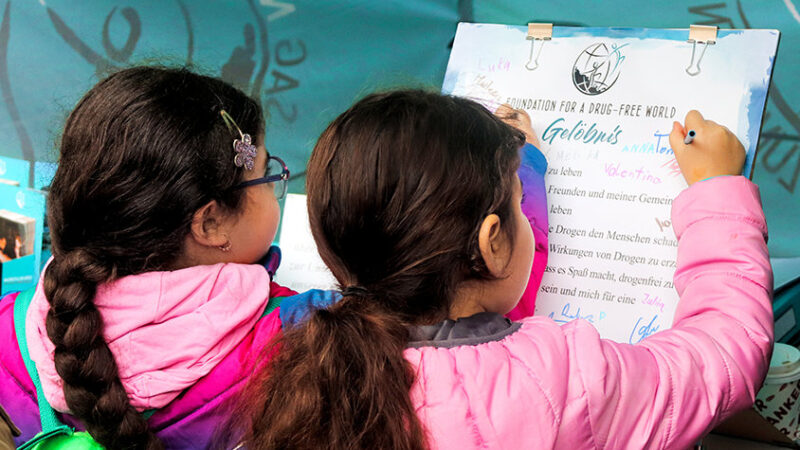
Drug education was cited as a continuing focus, building on earlier local outreach activities. In a Valencia example previously reported in the Church’s newsroom, Mission volunteers ran the Truth About Drugs initiative in the Port of Valencia, presenting prevention materials intended to support informed decision-making, a campaign whose main materials are sponsored by the International Association of Scientology and supported by the UN ECOSOC-recognized Fundacion para la Mejora de la Vida, la Cultura y la Sociedad. The campaign’s broader educational framework is published by the Foundation for a Drug-Free World, which states it is sponsored by the Church of Scientology and Scientologists and distributes drug-awareness resources internationally.
Flood response and volunteer mobilisation
The New Year’s review also underscored emergency response efforts by Scientology Volunteer Ministers, describing their participation as “decisive” during Spain’s deadliest floods of the century. In late October and early November 2024, severe flooding in eastern Spain caused a death toll exceeding 200, prompting large-scale rescue, recovery, and humanitarian operations and being described by international media as among the most lethal natural disasters in Spain in this century (Associated Press report; Reuters video report; The Guardian feature). The Volunteer Minister response contributed to stabilizing community support systems in Valencia, and local authorities recognized the Mission’s contribution to strengthening the city’s social foundation.
Ivan Arjona, the Church of Scientology’s representative to the European Union, the OSCE, the Council of Europe and the United Nations, said the Valencia account reflects a wider European civic principle of neighbourhood responsibility.
“Across Europe, communities are strongest when citizens translate shared values—human dignity, solidarity, and responsibility—into practical action,” said Ivan Arjona. “What stands out in Valencia is the combination of education, prevention, and volunteer service operating in a local setting and doing so in ways that support the common good, and the Valencian Scientologists always set a good example of that.”
Scientology and its social programmes
Scientology is a contemporary religion founded by Mr. L. Ron Hubbard and currently steadily led by Mr. David Miscavige. Alongside its ecclesiastical services, the Church sponsors a number of social education programs—among them human rights awareness, drug prevention, and community ethics materials—often delivered locally by volunteers. The Volunteer Minister program is presented by the Church as a form of trained community response, providing practical assistance and what is described as “spiritual first aid” during crises (program overview).
In Valencia, the local model relies on sustained volunteer capacity—described in the New Year’s review as “nearly 200 volunteers” plus the 300 during the DANA response—and on regular outreach in public areas and community settings, with an emphasis on prevention education and civic resilience.
The Church of Scientology, its churches, missions, groups, and members are present across the European continent, supporting initiatives in education, prevention, and community betterment. The Church’s legal status and recognition continue to grow, with court and administrative decisions in a number of jurisdictions recognizing Scientology as a religion, including by the European Court of Human Rights; background documentation on recognitions is compiled in the Church’s reference materials on religious recognitions.